One of the greatest blessings to celebrate in life is undoubtedly one’s good health! Understanding what your own body does and does not need in the form of food and nutrition is a critical component of maintaining and extending the longevity of the life you love.
It’s March! (AKA National Nutrition Month)
In addition to regular workouts, getting good sleep, eating clean and healthy, etc., countless factors work behind the scenes to drive a person’s overall health. Every March, a nutrition education and information campaign is sponsored by the Academy of Nutrition and Dietetics. National Nutrition Month focuses on making informed food choices and developing sound eating and physical activity habits. National Nutrition Month started in 1973 as “National Nutrition Week” and evolved into a month-long observance of growing interest in nutrition.
While every shape and size of junk food is ever-present in our fast-food-paced world, this year’s theme for National Nutrition Month is “Food Connects Us”. Think about it – food often connects us to cultures, our families, friends, and food and libations are regularly the spotlight of social gatherings. We get in such a rush that we sometimes fail to appreciate the nutritious food options readily available.
A little effort is all it takes to see the changes you want to make to your health. You may need to start asking more questions about your diet. How was this dish prepared? What are the ingredients? If you slow down, you realize that any meal provides the opportunity to learn about its preparation, who made it, where ingredients were sourced, etc. Aspects like health, traditions, seasons, and ease of access are factors that forge our mindsets and relationship with food.
Considering the impact food has on every day of our lives, throughout March, the Academy of Nutrition and Dietetics presents how waste, budget, schedule, plant-based eating, and more can directly impact your overall health. This initiative provides a refresher course in fixing healthy snacks, eating breakfast, portion sizes, activity levels, nutrition labels, safety guidelines, water, supplements, and so much more!
If you want to participate in or learn about National Nutrition Month, click here!
And speaking of nutrition … Trust your gut and pursue your passion for wellness with Parker University!
Packed with Flavor – Parker University’s Nutrition Science Online Program
Parker University proudly offers a popular online Nutrition Science bachelor’s degree program for students to experience an engaging and dynamic learning environment covering everything from nutritional biochemistry to health promotion. Whether you’re interested in pursuing graduate studies, a career in wellness, or groundbreaking research, Parker University’s Bachelor of Science in Nutrition Science sets the foundation for your future career, whether you want to continue to graduate studies, a wellness career, or participate in research initiatives.
Parker University’s Nutrition Science degree program is ideal for current and aspiring health professionals! This program empowers students to discover all the aspects of nutrition science and its applications in healthcare. Have a crazy schedule? Parker University’s fully online program is designed to fit seamlessly into your busy life. Sometimes, life can feel like one big juggling act, but this program prioritizes the balance of education, work, and family, all while you pursue your passion for nutrition.
How Can I Make a Career Out of Nutrition Science?
You can pursue and create your career path in Functional Nutrition (requires further education to obtain an MS or PhD degree), Nutrition Education, Health and Wellness Coaching, Corporate Nutrition, Community Health, and more.
A Step-by-Step Recipe for Success
Parker University’s curriculum prepares graduates for careers in nutrition, health promotion, corporate wellness, and advanced degrees like Parker University’s Master of Science in Functional Nutrition or Strength and Human Performance. Your path to becoming a dietitian, physician, or healthcare leader starts here at Parker University!
To learn more about Parker University’s prestigious Nutrition Science online degree, click here!
Functional Nutrition – Nourish Your Future
Parker University’s intensive online Master of Science in Functional Nutrition degree allows students to delve into evidence-based studies about nutritional biochemistry and real-world applications in health maintenance, disease treatment, and prevention.
Created with Health Professionals Like You in Mind
Beyond the basics, Parker University’s Functional Nutrition degree program focuses on advanced nutrition concepts to incorporate into your practice.
A Functional Nutrition degree allows Parker University graduates to pursue careers in Functional Nutrition, Nutrition Education, Health and Wellness Coaching, Corporate Nutrition, Community Health, and more. Upon graduation, students earn eligibility to become a Clinical Nutrition Specialist (a highly recognized certification that can open doors with Medicare, Medicaid, and major insurance providers).
Click here to learn all about Parker University’s Functional Nutrition degree.
Get the Stats
The employment of dietitians and nutritionists is projected to grow up to 11 percent and is projected to offer 5,100 job opportunities by 2031.
Are you ready to pursue your passion for health and nutrition? Go to parker.edu to access our menu of Parker University program information.
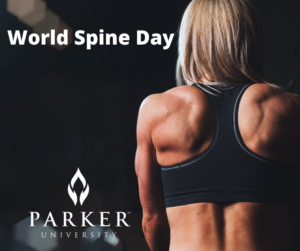
Parker University Determines What Your Back Pain is Aching to Tell You!
Every fall, World Spine Day is observed by countless health professionals and public organizations, like Parker University, devoted to delivering the most critical information regarding spinal wellness and education. That is what Parker University is all about! Parker University celebrates the World Federation of Chiropractic’s World Spine Day, themed “Back 2 Back,” aimed at resetting and refocusing public attention on how vital it is to tune in to their spinal health.
On October 16, World Spine Day helps promote the importance of adequate physical activity, good posture, responsible lifting, healthy working conditions, and so much more. The unique day of recognition reveals the lack of access many people have to quality spine care and rehabilitation in under-served communities. This is something we can all put forth a little effort to help improve!
Chiropractic Back Facts – Did You Know?
- One billion people around the world suffer from spinal pain.
- Spinal pain is the overall most significant cause of disability throughout the world.
- Experts estimate 80% of the population will experience back pain.
- 25% of U.S. adults report having lower back pain within the last three months.
- Back pain is the most common pain reported.
- Almost 14% of insured patients who received care for lower back pain were prescribed opioids.
- One in three people state that back pain impacts their everyday life.
- It is estimated that costs are reduced by 55% when introducing physical therapy before invasive treatment options.
Having access to proper long-term health management and back pain prevention is essential, but since dedicated spinal health professionals are not available in various parts of the world, helping people learn to self-manage their spinal condition is a great way to initiate beneficial change.
Simple, easy, and healthy ways for people to help manage their spinal pain:
- stay mobile
- avoid physical inactivity
- do not overload your spine
- lose weight
- quit smoking
- try massage therapy
- take a yoga class
- be sure to stretch
How can you adjust and help your community recognize the significant impact back pain has on the world? More information about the World Federation of Chiropractic’s World Spine Day is available at worldspineday.org.
Do not passively accept this time as a time of social and physical isolation; be proactive!
The global COVID-19 pandemic has sent billions of people into seclusion and isolation. This certainly has a cascade effect in accelerating emotional isolation, loneliness, and lethargy. But even before the pandemic hit, we were already in a sinking ship of emotional and social disconnectedness. We entered this pandemic with a booming economy, but the winds of change were already present. Banks were closing branch offices at an astonishing rate, live entertainment, cinema, and sports attendance was significantly reduced. We did not spend time with friends and family or know our neighbors as we did in bygone years. We were already “social distancing” long before the coronavirus arrived.
The life expectancy for Americans has dropped for the third year in a row, driven by the self-inflicted inclination for drug overdoses and suicide. Even before this pandemic struck, the number of lonely people was on the rise. Social isolation and loneliness may be a larger threat to public health than obesity or smoking. There are several pandemics which have risen like opportunistic pathogens in the wake of the COVID-19 pandemic. It is possible that these concurrent conditions will reduce the life expectancy of many people who survive the COVID-19 pandemic, possibly by years. The following is a compilation of some of these concurrent maladies.
Depression
Social isolation and loneliness combined with fear and increased alcohol and drug use will certainly increase the number of people suffering from depression. Depression brings with it self-destructive behaviors such as excessive alcohol consumption, drug use, and suicidal thoughts and tendencies.
Intellectual Atrophy
Social media has actually segregated us into homogenous groups. Social media and the news networks divide us into groups that think just like us, and thus eliminate the intellectual workouts of self-reflection and self-assessment. We are becoming intellectually lazy. This pandemic within the pandemic is intellectual atrophy. Atrophy is a word that implies the loss of strength due to disuse. We need to interact with people who think differently than us. If you only interact with people who agree with your religion, philosophy, or political persuasion, then you are in danger of intellectual atrophy.
Osteoporosis
Bone strength results from challenge and adaptation. If we do not consistently place a stressful load on our bones, they lose substance and weaken. Sitting at home will cause bone weakening in most people, but especially in the elderly. Since it is hard to regain bone strength after it is lost, especially in the elderly, we may see a rise in hip fractures and other bony injuries in the coming years.
Sarcopenia
While the word osteoporosis has entered the lexicon of most of the English-speaking world. Sarcopenia is a newly introduced word. It is a term which suggests the progressive decline of muscle mass, frequently attributed to the effects of aging. Muscle mass plays a considerable role in health. Not only is it important for mobility, but it also has important roles in glucose metabolism and cardiovascular health, including regulating blood pressure.
Inactivity or a reduction in muscular challenge will result in a loss of muscle mass. Loss of muscle strength and mass (sarcopenia) has a direct effect on the quality and quantity of a person’s years.
Dementia
Loneliness contributes to the loss of cognitive dexterity and contributes to dementia. With millions of seniors in isolation, and many of them with some degree of cognitive decline already, we can anticipate an increase in clinical levels of dementia in that population as we progress through this extended period of isolation.
Malnutrition
Many school-aged children in our economically depressed communities rely on school lunch programs to obtain proper nutrition. With the suspension of school, there is a reduction in subsidized meal programs for those enduring economic hardships. Not only the poor, but also the elderly are at risk for malnutrition. They are already more predisposed to inadequate caloric or food intake, poor food choices, and the inability to shop for or prepare food. These factors are now compounded by the current situation.
Substance Abuse
People stuck at home during the COVID-19 crisis are both bored and anxious. This is a recipe for substance abuse. In the U.S., “off-premise” alcohol consumption was elevated by 55% in late March 2020. The longer this isolation persists, and the more people become absorbed with the negative news stories, the greater this problem will be.
Domestic Abuse
Domestic abuse increases when families are confined together. Reports from around the world are showing that we are facing a pandemic of domestic violence. The stew of confined living spaces, uncertain economic outlook, and a reduction in emotional and physical outlets, combine to heighten tensions and place the vulnerable at greater risk.
Cardiovascular Disease
A sedentary lifestyle affects cardiovascular health in many ways. The rate at which cardiovascular health diminishes with inactivity is astounding. Loss of movement will certainly accelerate the decline of cardiovascular health of those with a propensity toward cardiovascular disease, but anyone who is sedentary can expect a decline in cardiovascular fitness as well.
Obesity
It appears that obese patients are having some of the worst outcomes and more severe complications when they contract the COVID-19 virus. Ironically, the inactivity, constant access to food, and increased alcohol consumption will most likely lead to weight gain, one of the most predisposing factors for a negative outcome in COVID-19 patients.
Solutions are Multifactorial
Fortunately, solutions exist for most of these conditions.
Reject passivity. The primary prevention method is to take an active role in your own health and within your scope of influence. Do not passively accept this time as a time of social and physical isolation; be proactive. Exercise, engage in social activities (while maintaining proper protective measures), get outside, and make a concerted effort to eat properly and drink responsibly.
Engage socially with others, even those with different opinions … and keep it friendly. Accept their differences and move on with your relationship with them. You need your friends, and they need you. Engage them on topics of mutual interest. Do not engage in discussing who is to blame for what is happening. Use technology and find new ways to connect. There are many ways to communicate with both audio and video interactions. Avoid watching the news obsessively and interacting negatively on social media.
If you cannot think of anything else to do, go for a walk. Walking stimulates neuronal activity, preserves muscle and bone strength, pumps lymph fluid, and supports cardiovascular health and a positive mental attitude. Walking outside will also provide a boost in vitamin D levels. Walking helps almost everything mentioned in this article.
Finally, look out for others. Encourage those in your sphere of influence to walk and to socially engage. Reach out to shut-ins and talk to them. Ensure your family and friends are eating correctly. By being a source of light in this dark time, you will not only help others, but also improve your own mental health. Albert Schweitzer may have said it best: “I don’t know what your destiny will be, but one thing I know: the only ones among you who will be really happy are those who have sought and found how to serve.”
Provided by Dr. William E. Morgan, president of Parker University in Dallas, Texas. He has served as a consultant to the medical departments in the U.S. Capitol and the White House.
While the COVID-19 virus rages across the globe, killing tens of thousands, the recommendations from infectious disease experts will also leave a grim toll on society. “Social distancing” and self-imposed isolation are certainly an appropriate societal response to impede the impact and spread of this dreaded virus, but these actions will also cause an unintended secondary health crisis. We need to identify this and work to minimize its impact.
The health risks of self-isolation caused by our current shelter-at-home mandates include a deleterious effect on several systems of the body: musculoskeletal (muscles and bones), cardiovascular, mental health, neurological and cognitive health, and immune systems. As we look at the ancillary news stories, we can begin to perceive the unintended consequences of our current plan of action. These stories include the death of a well-known star from a pulmonary embolism (a blood clot in the lungs often caused by prolonged sitting), a dramatic increase in societal alcohol consumption, anxiety from job/income loss, accelerated dementia of patients in nursing homes because of isolation, and reports of increased anxiety and depression.
For some people, this lockdown will shorten their life expectancy more than exposure to the virus would. They will survive the virus, only to shorten their lives through a passive interpretation of how they should hunker down. But there are action steps which can ensure that you not only survive this lockdown, but come out of it in better health than you went into it.
Your Plan of Action Should NOT be a Plan of Inaction.
Cardiovascular, muscle, bone, and mental capacities rapidly atrophy in the absence of stimulation and exercise. We must have a plan of action to preserve our physical health and mental faculties. This should not be a time of binge eating while watching TV.
Exercise every hour, not just every day.
While a daily workout is important, it is also essential that we move throughout the day. Movement will ensure that we keep our immune system active, our lymph flowing, and prevent blood flow from stagnating and forming clots. Get up and walk around at least every hour, and avoid prolonged sitting. If you are in the midst of watching your favorite tiger documentary, get up and march in place for a few minutes every hour.
Work out every day.
While motion is vital for blood flow and immune response, you should continue to exercise to ensure that you do not lose muscle and bone strength as well as cardiovascular fitness. Move every hour, but also work out every day. The speed at which muscles atrophy and cardiovascular capacity diminish during total rest is astounding. It is very important to work your muscles and heart every day while in isolation. There are plenty of resources on the internet for exercising while in isolation.
Avoid social isolation.
Social distancing is a misnomer; what we are really doing is called physical distancing. We need to avoid social distancing and instead remain socially engaged. This can be done through social media, phone calls, FaceTime, and many other mediums. If you can see a face during your social time, it is even better. Take this time as an opportunity to connect with old friends and to re-establish a social network.
Isolation is a factor that accelerates the symptoms of dementia and depression. It is important that we avoid social isolation and continue to maintain a healthy network of friends and family. If you know someone who is isolating alone during this lockdown, take the opportunity to contact them often to engage them.
If you are in lockdown with other people, remain engaged. Play games. Be creative. Plan, prepare, and eat meals together. Talk. Listen. Pop popcorn and watch a feel-good movie when you do watch something. Avoid compulsively watching the news or focusing on the negative aspects of this historic event.
Helping others will help yourself.
If you can be a beacon of hope to others, you will be uplifted as a fringe benefit. Right now, there are many depressed, anxious people focusing on negative events over which they have no control. If you know of someone slipping into despair, call them, and encourage them.
Get outside.
Exposure to the sun is essential on many levels. It affects our mood, helps our body establish the normal circadian rhythm of the sleep-wake cycle, and it also helps our immune system through the production of vitamin D.
Focus on self-improvement.
It is hard to get depressed when you are actively seeking a goal. Take this time at home to improve myself physically, mentally, and spiritually. Exercise every day, seek depth to relationships, and work on projects that will help you reach your goals in life.
We are like the caterpillar who enters the cocoon for a season of metamorphosis, which later emerges from the cocoon with a new purpose and the ability to take flight. What you spend your time doing now will impact your future. Devote yourself to self-improvement, exercise, and relationships.
Keep a positive mindset and remember, “You are not stuck at home; you are safe at home.”
Provided by Dr. William E. Morgan, president of Parker University in Dallas, Texas. He has served as a consultant to the medical departments in the U.S. Capitol and the White House.