Guest Blog Writer: Patrick Bodnar DC, cAVCA
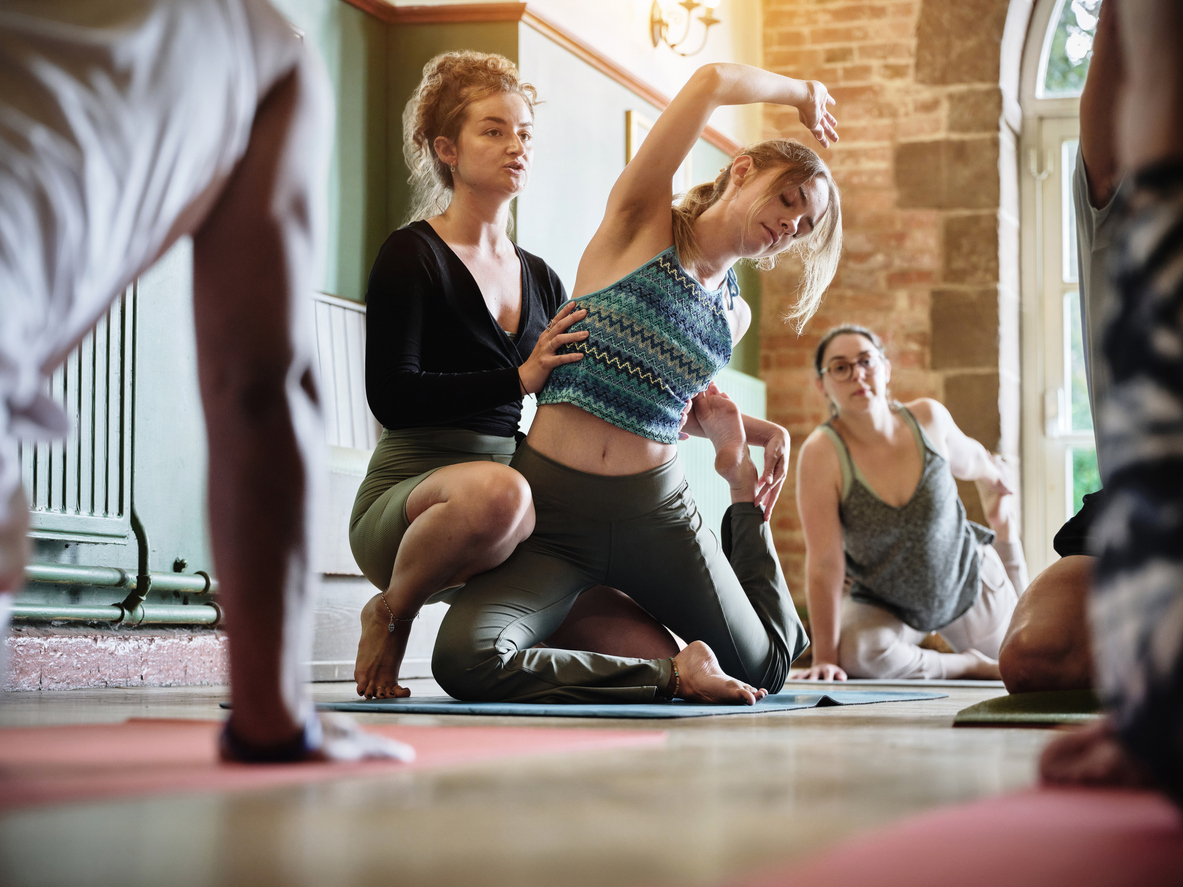
Most people meet yoga in a studio. It is where you first learn to move with your breath, to slow down, and to feel the practice in your own body. That experience is foundational, and no academic program should pretend to replace it.
But a question is surfacing more often among committed practitioners and aspiring teachers. Once you know how yoga feels, where do you go to understand how it works? For a growing number of students, the answer is a university.
What Today’s Students Are Really Looking For
Many people entering yoga teacher training now want more than sequences, philosophy, and cueing. They want to understand the body and mind they are working with. They are asking questions like:
- How movement shapes biomechanics and joint health
- How breath influences the nervous system
- What the science says about stress regulation and resilience
- Which movement patterns are safe for certain populations, and which are not
- How mindfulness affects wellbeing and performance
This is not a rejection of traditional yoga. It is a sign that practitioners want to hold both the experience of yoga and the science that helps explain it. A studio is built to teach the first. A university is built to teach the second.
What a University Adds That a Studio Usually Cannot
For example, 200-hour training at a studio is often led by experienced teachers sharing what they have learned in practice. That has real value. A university brings something different to the same training. Its faculty study anatomy, physiology, neuroscience, and human performance as their profession, not as a side subject.
That difference shows up in concrete ways. Students learn:
- Anatomy and physiology from instructors who teach it across healthcare programs
- Movement science and human performance grounded in current research
- Research literacy, so you can read a study rather than repeat a claim
- How yoga connects to broader healthcare and wellness practice
- An academic standard, and a recognized institution, behind your certificate
None of this competes with the heart of yoga. It deepens it. You leave able to lead a class and able to explain why what you are teaching works.
Yoga Education Is About More Than Teaching
Another shift is worth naming. Many people who enroll in teacher training today do not plan to teach professionally. They come as:
- Healthcare professionals interested in whole-person care
- Students looking for tools to manage stress and build resilience
- Wellness practitioners who want a deeper grasp of movement and mindfulness
- Individuals pursuing personal growth
For these students, yoga education is a path toward self-awareness, leadership, resilience, and lifelong learning. A university setting, where that growth sits alongside rigorous study, suits that goal well.
Why Parker University
Parker University was built around evidence-based healthcare and human performance. That focus is exactly what this kind of training calls for. Parker’s 200-Hour Yoga Teacher Training Certificate integrates movement, breath, mindfulness, anatomy, and evidence-informed wellness, while honoring the traditions that have carried yoga for generations.
Whether you want to teach, deepen your own practice, or bring yoga into your work in healthcare or wellness, the program is designed to give you both the practice and the understanding behind it.
At its best, yoga education helps people become more aware, more compassionate, more resilient, and more connected to themselves and to others. That is true whether you ever step in front of a class. Yoga teaches us to guide others. It also teaches us to understand ourselves.
About the Author
Patrick Bodnar, DC, cAVCA, is a chiropractor, educator, and longtime student of yoga with more than 25 years of experience in healthcare and higher education. He is actively involved in the development of Parker University’s Yoga Education initiatives and is passionate about the integration of movement, breath, mindfulness, yoga, and chiropractic care to support health, well-being, and human potential. In addition to his work in higher education, Dr. Bodnar maintains an equine chiropractic practice, where he applies many of the same principles of presence, awareness, and connection in the care of horses.
About Parker University
Parker University is a leading health sciences institution located in Dallas, Texas, dedicated to educating and inspiring the next generation of healthcare professionals. Through academic excellence, innovation, and a commitment to student success, Parker University continues to make its mark both in the classroom and beyond.